

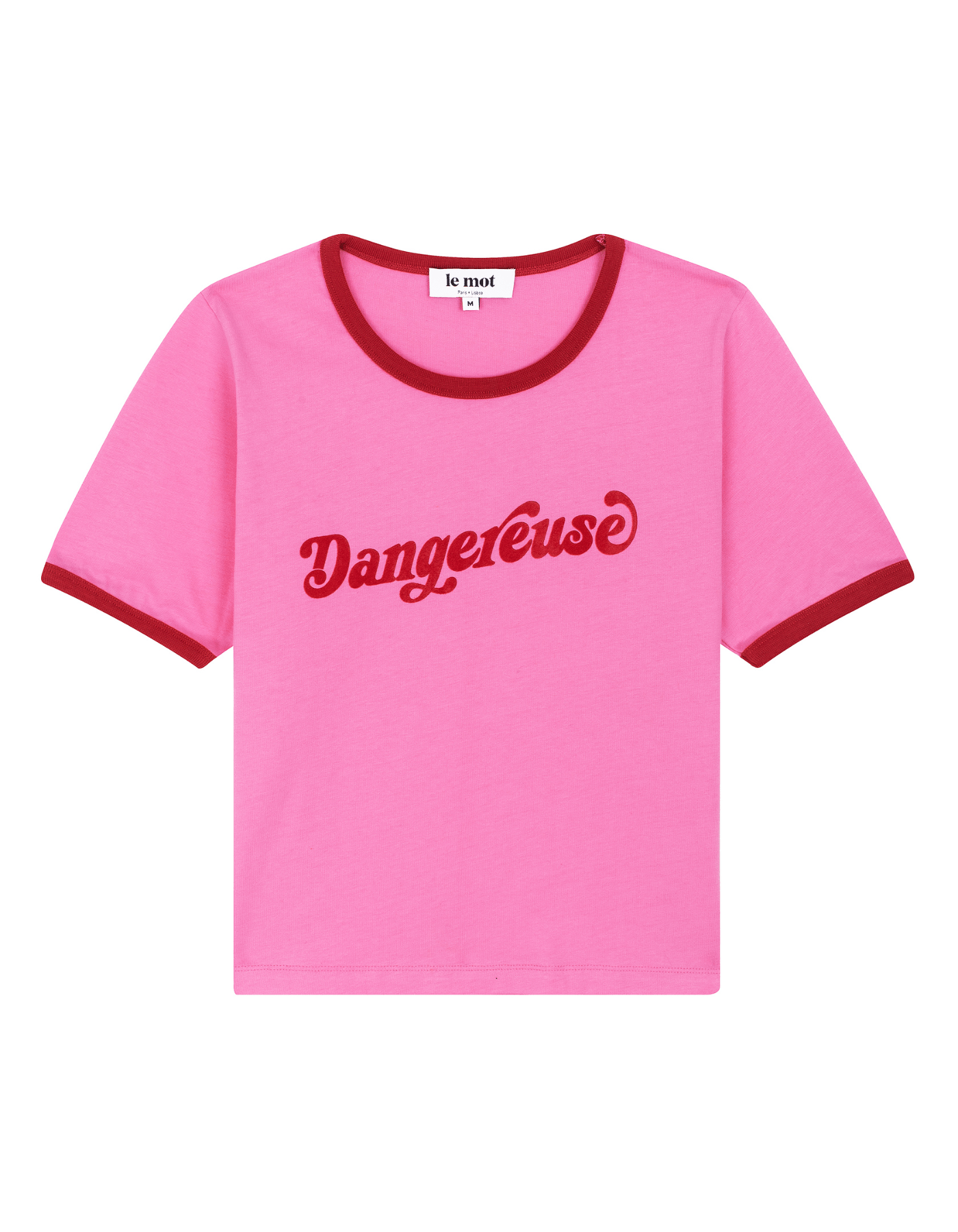




Dangereuse ringer t-shirt
Small batch production. We don’t restock most pieces
The kind of t-shirt that does all the work for you.
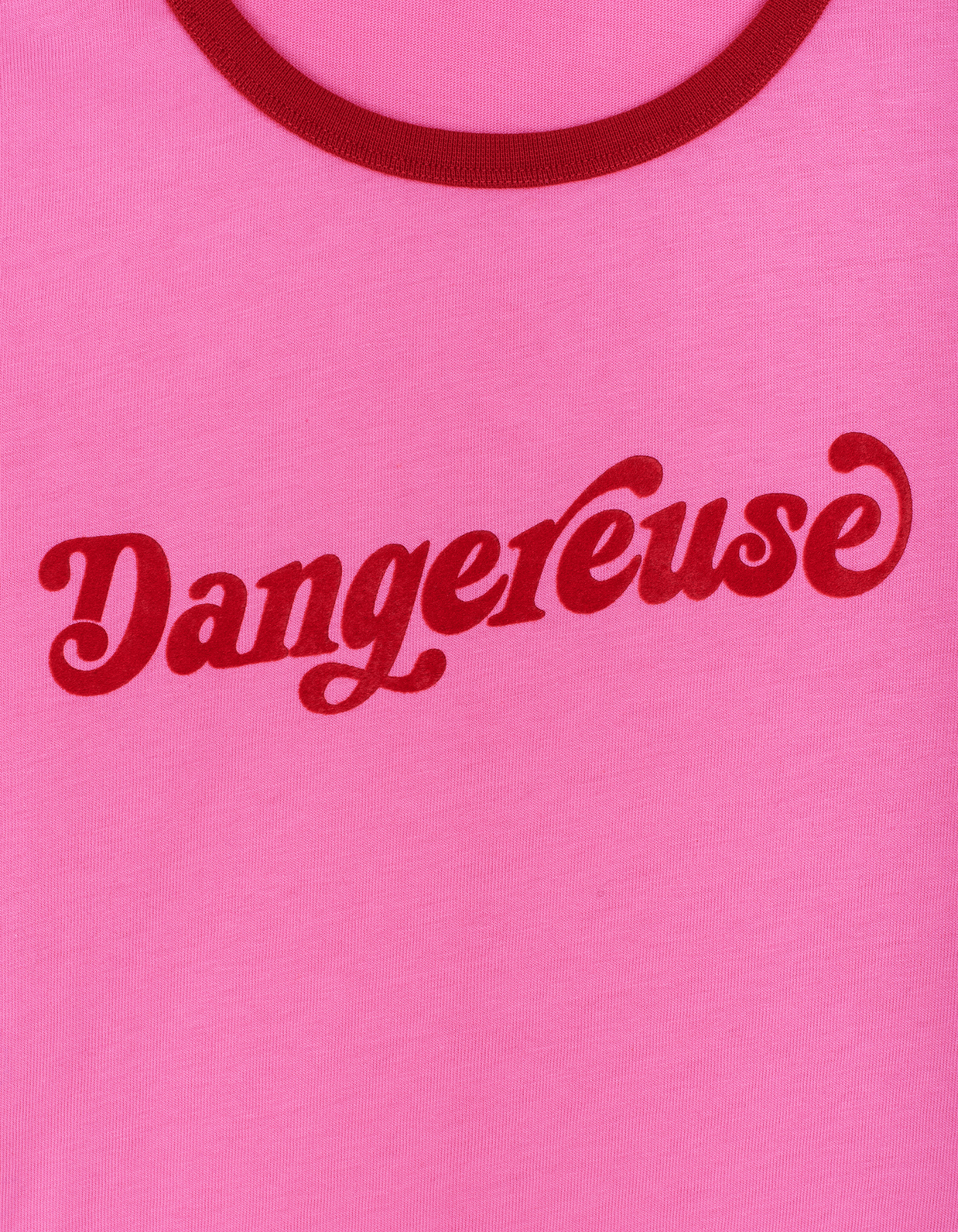
Dangereuse pairs a soft pink cotton base with bold red velvet lettering. It's the piece that instantly elevates even the simplest outfit.
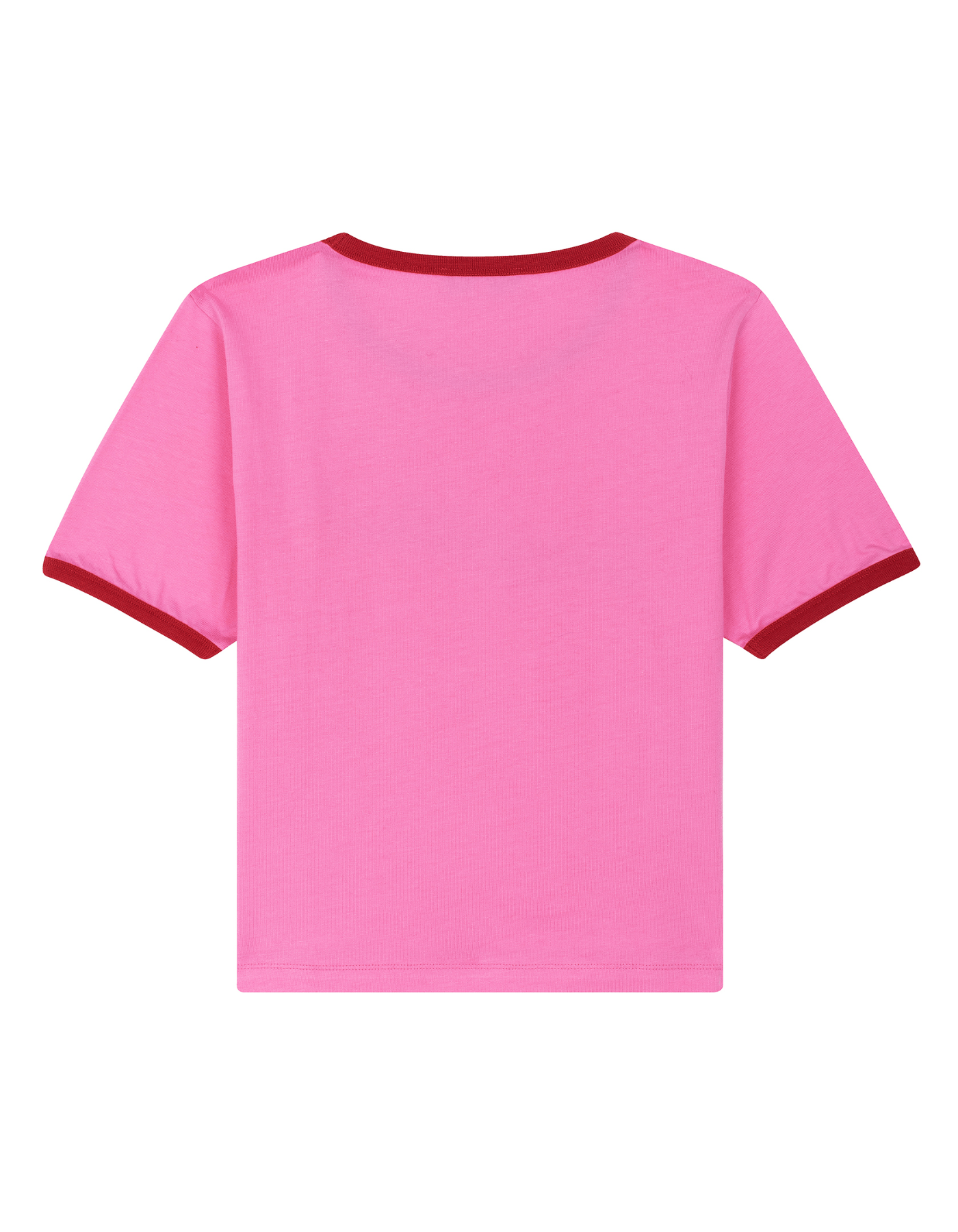
Made in Portugal from soft, premium cotton, it’s easy to wear, flattering, and designed to be worn on repeat.
Produced in small quantities, so it won’t be everywhere.
Size & Fit
- Slim fit, fits small. If you are in between sizes, size up
- Red trimming on cuffs and neckline for structure
- Model is 1,72cm wearing size M
Please check our size guide here.
In case you have doubts regarding this style, please drop us a line at: info@le-mot.com and we will be happy to help you find the perfect size.
Shipping & Returns
All orders are shipped within 1-2 work days
- Portugal & Spain via MRW - delivery in 1-2 work days
- International via FedEx - delivery in 3-7 work days
All items can be exchanged or returned in 30 days. More info here.
Details & Care
- Machine wash up to 30ºC
- Do not bleach
- Can be dry cleaned

powered by

% CO2e
Below category's global average
Product Life Cycle Analysis
0%

Raw Materials
Extraction and processing of raw materials (agriculture, mining, logging) create environmental impacts before manufacturing begins.
0%

Manufacturing
Production consumes energy, water, and other raw materials, resulting in emissions and natural resource depletion.
0%

Packaging
Packaging materials such as plastic, paper and metal are used to accommodate and transport the product, contributing for their carbon footprint.
0%

Distribution
The transportation of goods generates greenhouse gas emissions, influenced by transport type, distance, and logistics.
0%

Use Phase & End of Life
Product usage may consume energy and resources through a certain lifespan, while its disposal may result in landfilling, incineration and recycling, releasing greenhouse gases.
A product life cycle analysis (LCA), in terms of carbon footprint, assesses the total greenhouse gas emissions generated at each stage of a product’s life, from raw material extraction to production, distribution, use, and disposal.
Dangereuse ringer t-shirt
Sale price€27.50
Regular price€55.00
Choose options
Dangereuse ringer t-shirt
Sale price€27.50
Regular price€55.00
powered by
% CO2e
Below category's global average
Product Life Cycle Analysis
0%
Raw Materials
Extraction and processing of raw materials (agriculture, mining, logging) create environmental impacts before manufacturing begins.
0%
Manufacturing
Production consumes energy, water, and other raw materials, resulting in emissions and natural resource depletion.
0%
Packaging
Packaging materials such as plastic, paper and metal are used to accommodate and transport the product, contributing for their carbon footprint.
0%
Distribution
The transportation of goods generates greenhouse gas emissions, influenced by transport type, distance, and logistics.
0%
Use Phase & End of Life
Product usage may consume energy and resources through a certain lifespan, while its disposal may result in landfilling, incineration and recycling, releasing greenhouse gases.
A product life cycle analysis (LCA), in terms of carbon footprint, assesses the total greenhouse gas emissions generated at each stage of a product’s life, from raw material extraction to production, distribution, use, and disposal.
